
Market Insight
Uganda Dried Fruit: 2026 Buyer’s Guide to Mango, Pineapple and Jackfruit
A 2026 buyer's guide to Uganda dried fruit: European demand, mango and pineapple seasons, contract specifications, EU and UK rules and a first-order checklist.
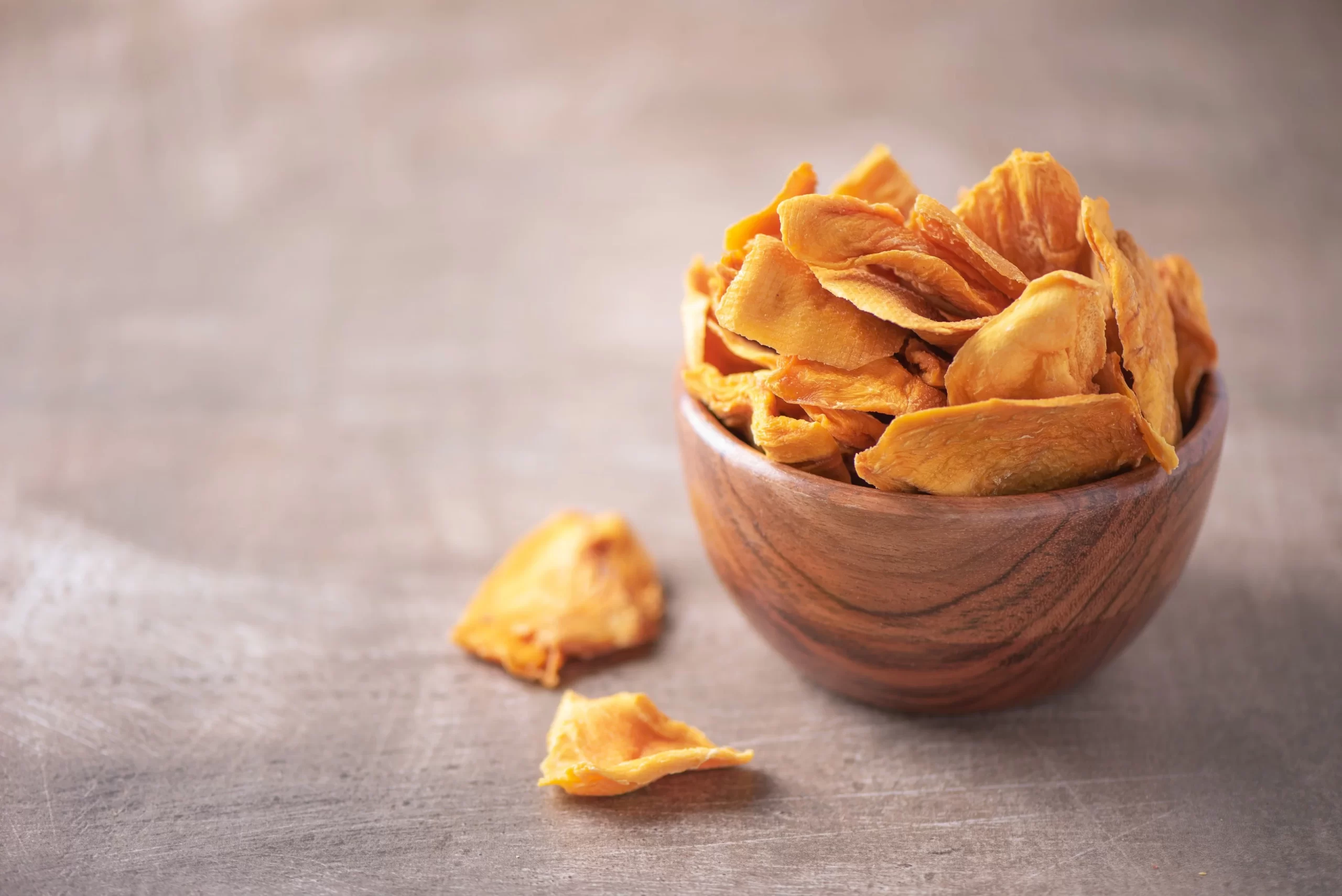
If you buy dried mango for a snack brand, dried pineapple for a cereal mix or banana chips for a trail-mix line, you have probably bought from Burkina Faso, Ghana or Ecuador. Uganda dried fruit is a smaller name on most procurement lists, yet the country has been solar-drying fruit for export since the early 1990s and is already one of the UK’s main sources of dried bananas. So is Uganda worth adding to your supplier base in 2026, and what should you check before you sign?
This guide covers the European market for dried tropical fruit, what Uganda grows and when, the specifications and certificates European buyers expect, how a price is built, and a practical checklist for your first order.
The European market for Uganda dried fruit
Demand for dried tropical fruit in Europe is steady rather than explosive, and that is good news for a new origin. According to the Dutch government’s CBI programme, which tracks this market for exporters in developing countries, Europe imports about 8,000 tonnes of dried tropical fruit a year from outside the continent. Add dried mango and pineapple, which customs statistics record separately, and the figure is roughly 16,000 tonnes. CBI expects import growth of about 2–3% a year over the next five years.
Mango dominates. By CBI’s January 2026 figures, mango makes up about 42% of imports, bananas and plantains 30%, pineapple 12% and papaya 6%. Healthy snacking, “no added sugar” claims and clean-label ingredients are what keep the category growing.
Where Uganda dried fruit sells in Europe
| Market | Size and trend (CBI, 2026) | What it means for Uganda |
|---|---|---|
| United Kingdom | Consumption above 5,000 tonnes, including about 1,500 t of dried mango; imports up about 14% a year over five years | The UK already buys most of its dried bananas from Uganda and Colombia, so Ugandan origin is familiar to UK buyers. |
| Germany | Imports above 4,500 tonnes; mango is over half | Europe’s largest organic food market, which suits organic-certified mango. |
| Netherlands | About 4,000 tonnes a year, at least 70% re-exported | A trading hub. Dutch importers buy, repack and redistribute across Europe. |
| France | About 1,500 tonnes of dried mango after strong growth | Mango and banana each take roughly 45% of the market. |
If you are a UK buyer, Uganda dried fruit is not an experiment. It is an origin with a track record. If you are in Germany or the Netherlands, it is a way to diversify away from West African mango, which has dominated European supply for years.
Retail prices show where the value sits
CBI puts average European retail prices at about €30 a kg for dried mango, €25 a kg for dried pineapple and €12 a kg for banana chips. The FOB price an exporter receives is typically only 20–30% of the retail price, with freight, import, packing, wholesale and retail margins making up the rest. That gap is why quality and reliability matter more than shaving a few cents off the FOB price.
Uganda’s solar-dried fruit story
Uganda dried fruit has a longer history than many buyers realise. Fruits of the Nile, founded in 1991, built an export business on solar-dried banana and pineapple. By 2007, according to the Ashden Awards, it sold about 120 tonnes of dried fruit, supplied by around 840 farmers in 120 producer groups, about 70% of them women. Europe was its main market.
Smaller processors have followed. The Daily Monitor has profiled women-led businesses drying mango, pineapple and apple banana in solar dryers built from food-grade netting, wood and polythene, sourcing from a few hundred outgrowers. The model is consistent across the sector: many smallholders, decentralised drying close to the farms and central sorting and packing before export.
That structure is both a strength and a risk. It spreads income widely and keeps fruit fresh between harvest and drying, but it also means consistency depends on how well the exporter controls dryer hygiene, moisture and sorting across many sites. Ask about it.
What Uganda dried fruit is available
Uganda’s equatorial climate supports a wide range of tropical fruit. For export buyers, four products matter most.
Dried mango Uganda
Mango is the biggest opportunity because it is the biggest category in Europe. Kent and Tommy Atkins are the export varieties most buyers recognise, and slices, strips and dices are the standard cuts. Natural, unsulphured mango is darker than sulphured mango, which some retail buyers accept as proof of a clean label and others do not, so agree colour expectations at the sample stage.
Dried pineapple Uganda
Smooth Cayenne pineapple grows year-round in central Uganda, which makes dried pineapple the most dependable product for continuous supply. Rings, chunks and dices are common formats for snacking and cereal blends.
Dried jackfruit and banana
Jackfruit is a niche but growing product, popular with snack brands looking for something new. Dried banana is Uganda’s proven export: while most European importers rely on Ecuador, the UK buys its largest volumes of dried banana from Uganda and Colombia. Banana chips (fried) are a different product with different contaminant rules, so be clear which one you are buying.
Seasons: when to contract Uganda dried fruit
Because Uganda sits on the equator, it has two rainy seasons and, for several crops, two harvests a year. That gives Uganda dried fruit a useful counter-seasonal role next to West African mango, which peaks in spring.
| Product | Main availability | Planning note |
|---|---|---|
| Mango (Kent, Tommy Atkins) | December–February main season; June–July short season | Contract about 60 days before the main season. |
| Pineapple (Smooth Cayenne) | Year-round, peak May–July | Most flexible for continuous programmes. |
| Jackfruit | About 10 months of the year | Volumes are smaller, so book early. |
For month-by-month detail, see the 2026 Uganda harvest calendar. A simple rule: open contracts about 60 days before the harvest you want, because drying, sorting, testing and road transport to the port all take time.
Specifications to put in your contract
A dried fruit contract without numbers is an argument waiting to happen. Write the specification down, attach it to the purchase order and test the first lot against it. These are the parameters that matter most for Uganda dried fruit, with the values Trade Africa Direct publishes for its dried fruit range as a reference point.
| Parameter | Published reference | Why it matters |
|---|---|---|
| Moisture | 12.0%–15.0% | Too high risks mould; too low makes fruit hard and brittle. |
| Water activity (aw) | Below 0.60 | The better predictor of microbial stability than moisture alone. |
| Sulphites (SO₂) | None added | Undeclared sulphites are the main cause of EU border rejections. |
| Added sugar | 0% | Supports “no added sugar” claims, now the top claim on new launches. |
| Total plate count | Below 10,000 cfu/g | A basic hygiene indicator for drying and packing. |
| Yeast and mould | Below 1,000 cfu/g | Signals drying and storage control. |
| Cut format | Slices, strips or dices | Agree size tolerances for dices and strips. |
Treat any supplier’s published figures, including ours, as a starting point. Ask for a certificate of analysis for the specific lot you are buying, ideally from an accredited independent laboratory, and test the first shipment yourself. The UNECE standards for dried mango, pineapple, banana and papaya are a useful neutral reference for defect tolerances and quality classes.
EU and UK rules for Uganda dried fruit
Getting the product right is half the job. The other half is getting it through European food law and your customers’ audits.
Legal requirements
- Sulphites: if used, they must stay within EU limits and be declared as an allergen. CBI reports that excessive or undeclared sulphites cause most border rejections of dried tropical fruit.
- Pesticide residues: products must meet EU maximum residue levels (MRLs). Ask for a residue screen on the first lot.
- Contaminants: the EU sets a cadmium limit of 0.02 mg/kg for tropical fruit, and banana chips have additional limits on PAHs from frying.
- Fumigation: ethylene oxide is banned as a fumigant in the EU.
- Labelling: bulk cartons should show the product name, origin, lot code, net weight, best-before date and any allergen warnings.
Buyer requirements: certification
Food safety certification is not legally required, but CBI is blunt: most established European importers will not work with a supplier that cannot show one. The GFSI-recognised schemes are BRCGS, IFS and FSSC 22000. UK retailers typically expect a BRCGS grade of AA, and Lidl requires IFS. Organic certification opens the German market, and Fairtrade or similar social standards help with ethical-sourcing buyers.
Ask every Uganda dried fruit supplier which certificates they hold today, which they are working towards and who audits them. If certification is still in progress, a smaller trial order through an importer that holds its own certification can be a practical bridge.
Duties
Uganda is a least-developed country, so its dried fruit enters the EU duty-free under the Everything But Arms arrangement and the UK at zero tariff under the Developing Countries Trading Scheme. Our guide to importing from Uganda explains the origin documents needed to claim those preferences.
How a Uganda dried fruit price is built
Unlike cocoa or coffee, dried fruit has no futures market. Prices are negotiated, and they are built from a stack of costs. Knowing the stack helps you judge whether a quote is realistic.
- Fresh fruit. It takes many kilograms of fresh fruit to make one kilogram of dried fruit, so the farm-gate price and the drying ratio drive cost.
- Drying and sorting. Labour, dryer maintenance, energy for any backup drying and hand sorting.
- Testing and certification. Laboratory analysis, audits and certification fees, spread across the volume.
- Packing. Food-grade liners and export cartons, which are often imported into Uganda and can be a significant cost.
- Logistics. Road transport to Mombasa for sea freight, or airport handling at Entebbe for air freight, plus documents.
A quote far below the market should raise questions about one of these steps, most often testing or sorting. A sensible approach for a first order is a firm price for a defined volume and specification, with the option to agree a programme price once the first shipments have been delivered to spec.
Packing and shipping
Dried fruit is hygroscopic: it pulls moisture from the air. Packing and transport protect your quality as much as drying does.
- Inner packing: food-grade polyethylene liners, heat-sealed or vacuum-sealed.
- Outer packing: 5 kg or 10 kg double-walled export cartons are common for bulk.
- Sea freight: trucked from Kampala to the Port of Mombasa. Trade Africa Direct quotes about 9 tonnes in a 20ft container and 19 tonnes in a 40ft container.
- Air freight: from Entebbe, useful for trial orders and urgent programmes. Trade Africa Direct lists a 500 kg air-freight minimum.
For long sea transits, ask about container desiccants and liners, and agree what happens if a lot arrives above the moisture limit.
Checklist for your first Uganda dried fruit order
New origins succeed when the first order is small, well specified and checked. Here is the sequence we recommend to any buyer, whoever the supplier is.
- Verify the company. Check its registration with the Uganda Registration Services Bureau and ask for its export registration with the Ministry of Agriculture (MAAIF).
- Ask for certificates. Food safety certification, organic if relevant, and a recent certificate of analysis.
- Request samples. Test them in your own lab or a lab you trust, including sulphites and pesticide residues.
- See the operation. Visit, send an agent or at least run a live video walk-through of the drying and packing site.
- Agree the specification in writing. Attach it to the contract with moisture, aw, microbiology, cut sizes and packing.
- Start small, with secure payment. A trial order by air, or a single container paid by letter of credit, limits your risk.
- Inspect before shipment. An independent pre-shipment inspection is inexpensive compared with a rejected container.
Conclusion: is Uganda dried fruit right for you?
Uganda dried fruit offers European buyers three things that are hard to find together: an equatorial climate with two seasons for mango and year-round pineapple, duty-free access to both the EU and the UK, and an origin story built on smallholders and solar drying that sits well with clean-label brands. The trade-offs are real too: certification and consistency vary between suppliers, so verification and testing matter more than with established origins.
If you would like to explore Uganda dried fruit for your 2026 programme, send us your requirements with product, cut, volume and destination, or see the specifications on our dried fruit wholesale page. You can also reach the Kampala team on WhatsApp at +256 772 921055.
Is Uganda dried fruit duty-free in the EU and UK?
Yes. Uganda is a least-developed country, so its dried fruit enters the EU duty-free under Everything But Arms and the UK at zero tariff under the Developing Countries Trading Scheme. To claim the EU preference, the exporter must provide a statement on origin, with a REX number for shipments above €6,000.
When is dried mango from Uganda available?
Uganda’s main mango season runs from December to February, with a shorter season in June and July. Pineapple is available year-round with a peak from May to July, and jackfruit for about ten months of the year. Contract around 60 days before the season you want so drying, testing and transport fit.
Is Uganda dried fruit sulphite-free?
Much Uganda dried fruit is solar-dried without added sulphites, but practices vary between processors. Ask for a lot-specific certificate of analysis that reports sulphite content. Undeclared or excessive sulphites are the most common reason dried tropical fruit is rejected at EU borders, so test the first shipment.
What certificates should a Uganda dried fruit supplier have?
European importers usually expect a GFSI-recognised food safety certificate such as BRCGS, IFS or FSSC 22000, plus a certificate of analysis for each lot. Organic certification opens the German market. Also check company registration with URSB and export registration with Uganda’s Ministry of Agriculture.
How is Uganda dried fruit shipped to Europe?
Sea freight is trucked from Kampala to the Port of Mombasa and shipped in 20ft or 40ft containers. Air freight leaves from Entebbe and suits trial orders. Product is usually packed in food-grade polyethylene liners inside 5 kg or 10 kg export cartons to protect it from humidity.
Sources
- CBI (Netherlands Ministry of Foreign Affairs), “The European market potential for dried tropical fruit”, updated 21 January 2026: cbi.eu
- CBI, “Entering the European market for dried tropical fruit”, updated 22 January 2026: cbi.eu
- Ashden, “Fruits of the Nile”, 2008 Ashden Award winner profile: ashden.org
- Daily Monitor, “Highs and lows of exporting dried fruits, vegetables”: monitor.co.ug
- UK Government, “Preference tiers under the Developing Countries Trading Scheme”: gov.uk
- GSP Hub, “Uganda country information”, updated 15 October 2026: gsphub.eu