
Market Insight
How to Import from Uganda: EU & UK Documents, Duties and Supplier Checks
Planning to import from Uganda into the EU or UK? The duties, REX origin statements, phytosanitary certificates, EUDR rules and supplier checks you need.
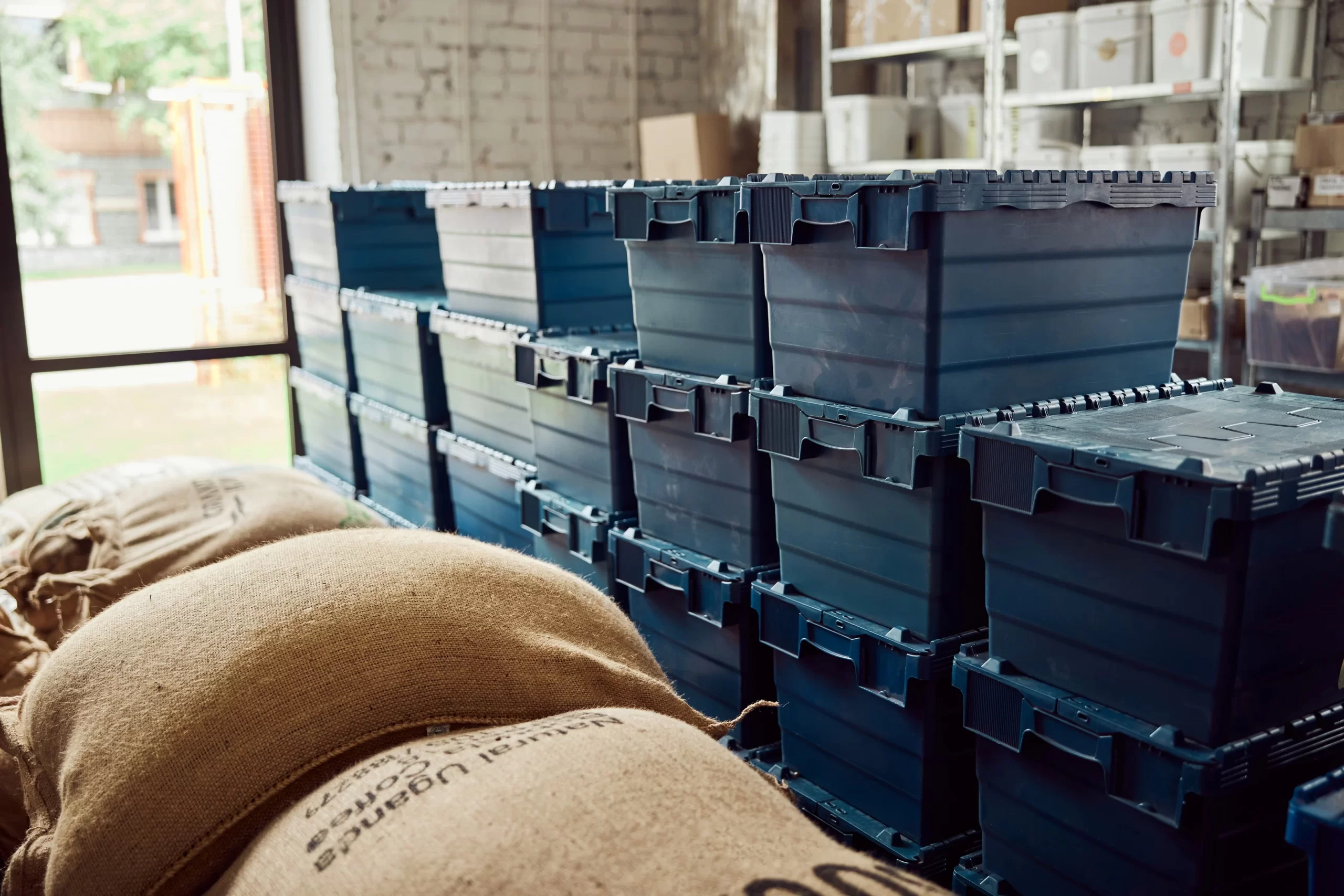
You have found a promising supplier, the samples look good and the price works. Now comes the part that trips up many first-time buyers: the paperwork. If you want to import from Uganda into the European Union or the United Kingdom, you will need the right origin document to pay zero duty, the right plant health certificate to clear the border, food safety evidence your customers will accept and, for coffee and cocoa, deforestation due diligence from the end of 2026.
This guide explains each document in plain terms, who issues it, when you need it and how to check that a Ugandan exporter can actually provide it.
Why buyers import from Uganda
Uganda is not a niche origin for Europe. According to the EU’s GSP Hub, last updated in October 2026, EU imports from Uganda reached €1.6 billion in 2025, continuing a strong upward trend, and the EU is Uganda’s second most important export destination, taking about 17% of its exports. Coffee leads, but cocoa, fish, flowers, fruit and vegetables all move to European ports every week.
The UK relationship is smaller but growing fast. Uganda’s exports to the UK doubled from US$10.7 million in 2019 to US$21.3 million in 2023, as reported by FreshPlaza in August 2025, and the UK government has publicly committed to keeping tariffs on Ugandan goods near zero.
Why the interest? Uganda sits on the equator, so many crops have two harvests a year. It has fertile volcanic soils in the west and east, a large smallholder farming base and, crucially for this guide, some of the most generous trade preferences any country enjoys in Europe.
Duties: what you pay to import from Uganda
Uganda is classified as a least-developed country (LDC). That status unlocks the best preference tier in both the EU and the UK.
| Market | Arrangement | Duty on most agricultural goods |
|---|---|---|
| European Union | Everything But Arms (EBA), part of the EU’s Generalised Scheme of Preferences | 0%, duty-free and quota-free for everything except arms and ammunition |
| United Kingdom | Developing Countries Trading Scheme (DCTS), Comprehensive Preferences tier | 0% on 99.8% of products |
Two practical points. First, many Ugandan products such as green coffee and cocoa beans already carry a zero standard tariff in the EU, so the preference matters most for products like processed foods, fish and some fruit. Second, preferences are not automatic. You claim them at import by presenting valid proof of origin, which is where many first shipments go wrong. VAT and any excise still apply as normal.
Proof of origin: REX and the statement on origin
To claim EBA preferences when you import from Uganda into the EU, the origin of the goods must be proven with a statement on origin. This is a short declaration, in wording set out in EU customs law, that the exporter adds to the commercial invoice or another commercial document.
What the REX system is
The REX (Registered Exporter) system replaced government-issued certificates for the EU’s preference schemes. Exporters register once with the competent authority in their own country and receive a REX number, which then appears on every statement on origin they make out. According to the European Commission’s Access2Markets service, shipments worth less than €6,000 can carry a statement on origin without registration; above that, the exporter must be registered. Uganda’s Ministry of Agriculture lists a REX number among the requirements for exporters supplying the EU.
Common origin mistakes
- Using the wrong document. A movement certificate used under other trade agreements is not the right proof for EBA. Ask for a statement on origin with a REX number.
- Missing REX number. Above €6,000, a statement without a valid REX number will not secure the preference.
- Origin rules not met. Products must be wholly obtained in Uganda or sufficiently processed there. Goods simply repacked in Uganda may not qualify.
You can check a REX number on the European Commission’s public REX database before you ship. For the UK, the DCTS has its own rules of origin, which were simplified in 2025. Ask your customs broker which origin statement wording your UK import needs.
Phytosanitary certificates
A phytosanitary certificate confirms that plant products were inspected and found free of regulated pests. In Uganda, these certificates are issued by the Department of Crop Inspection and Certification at the Ministry of Agriculture, Animal Industry and Fisheries (MAAIF), and all are now issued electronically through the ePhyto system.
How a Ugandan exporter gets one
- The exporter registers with MAAIF and has its packhouse or store inspected, receiving an export number.
- For each shipment, the exporter applies for inspection and presents the consignment.
- Inspectors check the goods and, if they comply, issue the certificate. The official fee listed by the Uganda Export Promotion Board is UGX 5,000, and inspection takes at least a day.
- Where fumigation is required, only a MAAIF-certified fumigator may carry it out, and a fumigation certificate must be presented first.
When you need one in the EU
Which products need a phytosanitary certificate in the EU is set out in Annexes XI and XII of Regulation (EU) 2019/2072. Fresh fruit and vegetables generally do, though the EU exempts five fresh fruits: pineapples, coconuts, durians, bananas and dates. MAAIF issues certificates for fresh produce, grains, oilseeds and semi-processed products such as coffee, tea and cocoa. Requirements for processed foods such as dried fruit or shea butter differ, so confirm with your customs broker or national plant health authority before the first shipment.
Food safety and quality documents
Customs clearance is one test. Your own quality team and your customers’ auditors are another, and they usually ask for more.
Certificate of analysis
A certificate of analysis (COA) reports test results for a specific lot: moisture, microbiology, contaminants or residues, and product-specific measures such as free fatty acids for shea butter or a cut test for cocoa. Insist on a COA tied to your lot number, and for a new supplier, ideally from an accredited independent laboratory.
Food safety certification
For food ingredients, European importers increasingly require a GFSI-recognised certificate such as BRCGS, IFS or FSSC 22000. The Dutch government’s CBI programme notes that most established importers of dried fruit will not work with a supplier that cannot show one. Organic, Fairtrade and Rainforest Alliance certificates are commercial requirements rather than legal ones, but they decide which customers you can sell to.
Residues and contaminants
EU food law sets maximum residue levels for pesticides and maximum levels for contaminants such as mycotoxins and heavy metals. Uganda has had fresh produce shipments intercepted in Europe in the past, which led to a voluntary export suspension for some products in 2016–17. A residue screen on the first shipment is a small cost against that risk.
EUDR for coffee and cocoa
If you import coffee or cocoa from Uganda into the EU, the EU Deforestation Regulation (EUDR) changes what you need from your supplier. After two postponements, it applies from 30 December 2026 to large and medium operators and from 30 June 2027 to most micro and small operators, under Regulation (EU) 2025/2650.
Under EUDR, you must be able to show that the coffee or cocoa was produced on land not deforested after 31 December 2020, and that it was produced legally. In practice, that means geolocation data for the plots where it was grown and a traceable chain from farm to container. EUDR covers cattle, cocoa, coffee, oil palm, rubber, soya and wood. Shea butter, dried fruit, macadamia, avocados and fish are not covered.
What to ask your Uganda coffee or cocoa supplier
- Can you provide plot geolocation data for the farms behind this lot?
- How do you keep traceable product separate from other stock at collection and processing?
- Which traceability or certification system supports your data?
Incoterms, routes and payment
Uganda is landlocked, so almost all sea freight moves by road along the Northern Corridor to the Port of Mombasa in Kenya. Air freight leaves from Entebbe International Airport.
| Term | Who pays sea freight and insurance | When it suits you |
|---|---|---|
| FOB Mombasa | You, from the port onwards | You have your own freight forwarder and rates. |
| CIF your port | The exporter, to your destination port | You want one delivered price and less logistics work. |
| FCA Kampala or Entebbe | You, from handover in Uganda | Air freight or consolidated shipments. |
For a first transaction, a letter of credit gives both sides protection: the exporter knows the bank will pay, and you know payment depends on compliant documents. CBI notes that importers typically move from letters of credit to open terms, such as payment 30 days after the bill of lading, once trust is established. Be cautious about large advance payments by telegraphic transfer to a supplier you have not verified.
For more on lead times and routes, see our guide to sourcing agricultural products from Uganda.
How to verify a supplier before you import from Uganda
Most Ugandan exporters are genuine, hard-working businesses. Fraud does happen in agricultural trade everywhere, though, and checking a new supplier is simply good procurement. We encourage buyers to run these checks on every Ugandan supplier, including us.
- Company registration. Every company in Uganda is registered with the Uganda Registration Services Bureau (URSB). Ask for the certificate of incorporation and check it.
- Export registration. Exporters of plant products must be registered with MAAIF and hold an export number. Fresh fruit and vegetable exporters must also have an audited packhouse, a traceability system and a physical address.
- REX number. If the supplier says it exports to the EU, it should have one. Check it on the EU’s public REX database.
- Tax registration. A Uganda Revenue Authority TIN is required for export.
- Sample, then trial. Test samples in your own lab, then place a small trial order before committing to containers.
- See the operation. Visit, send an agent or ask for a live video walk-through of the warehouse or processing site, not just photographs.
- Independent inspection. A pre-shipment inspection by an independent inspection company confirms quantity, quality and packing before the container is sealed.
Document checklist by product
Requirements vary with the product, the destination and your customers. Use this as a starting checklist, then confirm details with your customs broker.
| Document | Green coffee and cocoa | Dried fruit | Shea butter |
|---|---|---|---|
| Commercial invoice and packing list | Yes | Yes | Yes |
| Bill of lading or air waybill | Yes | Yes | Yes |
| Statement on origin (REX) for EU preference | Usually not needed (0% standard duty) | Yes | Yes |
| Phytosanitary certificate | Yes | Confirm with broker | Confirm with broker |
| Certificate of analysis for the lot | Yes | Yes | Yes |
| EUDR due diligence data | Yes, from 30 Dec 2026 | No | No |
| Food safety certificate (BRCGS, IFS, FSSC 22000) | Buyer-dependent | Usually expected | Buyer-dependent |
Conclusion: import from Uganda with confidence
When you import from Uganda, the trade framework is on your side: duty-free access to the EU, near-zero tariffs in the UK and a government inspection system that issues electronic certificates. What makes the difference between a smooth first shipment and a stuck container is preparation: the right origin statement with a REX number, the right plant health certificate, a lot-specific certificate of analysis and, for coffee and cocoa, EUDR data.
Planning your first shipment? Send us your requirements and we will tell you which documents apply to your product and destination, or read about our quality and logistics process. You can also message the Kampala team on WhatsApp at +256 772 921055.
Do I pay import duty when I import from Uganda to the EU?
Usually not. Uganda uses the EU’s Everything But Arms arrangement, which gives duty-free, quota-free access for all goods except arms and ammunition. You must present a valid statement on origin; above €6,000 the exporter needs a REX number. VAT and any excise duties still apply.
What documents do I need to import from Uganda?
Typically a commercial invoice, packing list, bill of lading or air waybill, a statement on origin for EU preferences, a phytosanitary certificate for plant products that require one, and a certificate of analysis. Coffee and cocoa also need EUDR due diligence data for EU imports from 30 December 2026.
Who issues phytosanitary certificates in Uganda?
The Department of Crop Inspection and Certification at Uganda’s Ministry of Agriculture, Animal Industry and Fisheries (MAAIF) issues them electronically through ePhyto. The exporter must be registered with MAAIF, apply for inspection for each consignment and present the goods before a certificate is issued.
Is it duty-free to import from Uganda into the UK?
Yes, for almost all goods. Uganda is in the Comprehensive Preferences tier of the UK’s Developing Countries Trading Scheme, which gives 0% import tariffs on 99.8% of products. You still need valid proof of origin, so confirm the required wording with your customs broker.
How can I check a supplier before I import from Uganda?
Ask for the company’s URSB registration, its MAAIF export registration and its REX number, and check the REX number on the EU’s public database. Test samples, place a small trial order, see the operation in person or by live video and use a letter of credit for the first transaction.
Sources
- GSP Hub, “Uganda country information”, updated 15 October 2026: gsphub.eu
- European Commission, Access2Markets, “REX system”: trade.ec.europa.eu
- UK Government, “Preference tiers under the Developing Countries Trading Scheme”: gov.uk
- FreshPlaza, “UK keeps near-zero tariffs on Ugandan produce exports”, 28 August 2025: freshplaza.com
- Uganda Export Promotion Board, “Obtaining a phytosanitary certificate”: ugandaexports.go.ug
- Ministry of Agriculture, Animal Industry and Fisheries (MAAIF), “Export of fruits and vegetables”: agriculture.go.ug
- European Commission, “Phytosanitary certificate: trade in plants and plant products with non-EU countries”: food.ec.europa.eu
- Coolset, “EU Deforestation Regulation (EUDR): operator obligations before December 2026”, 19 October 2026: coolset.com
- CBI, “Entering the European market for dried tropical fruit”, updated 22 January 2026: cbi.eu