
Market Insight
Unrefined vs Refined Shea Butter Uganda: Buyer’s Guide
Unrefined vs refined shea butter explained: how each is made, what Grade A really means, why Uganda’s Nilotica shea is softer, and what to check before buying in bulk.
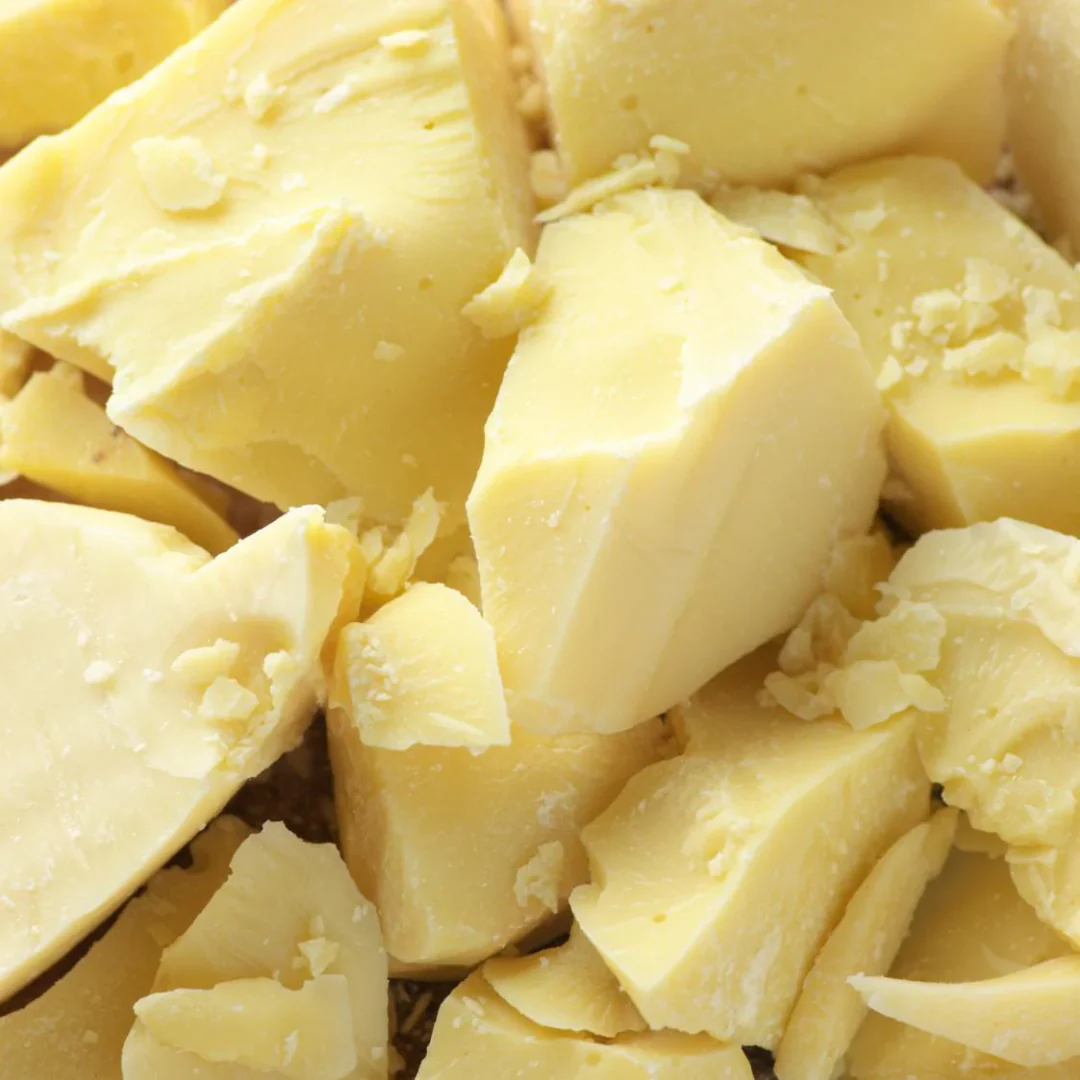
If you formulate creams, balms or soaps, the choice between unrefined vs refined shea butter shapes almost everything about your product: its colour, its scent, how it feels on the skin and what you can honestly put on the label. And if you are sourcing unrefined vs refined shea butter, Uganda adds a twist most buyers never hear about: East Africa grows a different shea, Nilotica, that is softer and richer in liquid oleic acid than the West African butter most of the market uses.
This guide explains how each type is made, what the much-quoted “Grade A” label really means, how Ugandan Nilotica compares, and the checks to run before you place a bulk order.
Unrefined vs refined shea butter: the short answer
Both start as fat from the nut of the shea tree. The difference is what happens after extraction. Unrefined shea is filtered and left largely as nature made it. Refined shea goes through further industrial steps that remove colour, smell and free fatty acids. Think of it like extra virgin olive oil versus a refined cooking oil: the refined version is neutral and predictable, the unrefined one carries more character and more of the original compounds.
| Feature | Unrefined shea butter | Refined shea butter |
|---|---|---|
| Processing | Extracted, then filtered | Extracted (often with solvents), refined, bleached and deodorised |
| Colour | Ivory to pale yellow | White |
| Scent | Mild, nutty, characteristic | Odourless |
| Minor compounds | Retains natural tocopherols and triterpene alcohols | Reduced by refining |
| Typical use | Natural and clean-label skincare, balms, soaps | Products needing a colour- and scent-neutral base |
| Label story | “Unrefined”, “raw”, traceable origin | Functional ingredient |
Neither is “bad”. The right choice depends on your formula, your brand promise and your customers. But you should know exactly which one you are buying, and why.
How refined shea butter is made
Industrial refining is designed to turn a variable natural fat into a consistent commodity. According to a shea grading guide by Baraka Impact (updated October 2026), the typical steps are:
- Extraction. Fat is extracted by mechanical press or, very often, with a solvent such as hexane.
- Refining. Free fatty acids and other impurities are removed.
- Bleaching. The natural ivory or yellow colour is removed.
- Deodorising. The nutty scent is removed, usually with heat and steam.
The result is a pure white, odourless and very consistent fat. That is useful if your cream must be bright white or your fragrance must not compete with the base. The trade-off is that refining reduces minor plant compounds such as tocopherols (vitamin E) and triterpene alcohols, which are part of why shea is valued in skincare in the first place.
Raw vs refined shea butter: what “hexane-free” means
Hexane is a petroleum-derived solvent that extracts more fat from the kernel than pressing alone. Residues are removed during refining, but many natural and organic brands prefer to avoid solvent-extracted ingredients altogether. If that matters to your label, ask your supplier directly whether the butter is pressed or solvent-extracted, and get it in writing.
How unrefined shea butter is made
Unrefined shea is extracted and filtered, but not bleached or deodorised. Traditional West African production cracks, roasts and grinds the nuts, then kneads the paste with water and boils it so the fat can be skimmed, cooled and filtered. Filtering removes particles, not colour or scent.
Trade Africa Direct’s Nilotica shea is produced differently from the traditional boiled method: it is cold-pressed and hexane-free, made from wild-harvested Nilotica nuts in Northern Uganda. Because Nilotica is naturally light in aroma and creamy in colour, it does not need chemical refining to be usable in fine cosmetics.
Shea butter grades: what Grade A really means
You will see “Grade A shea butter” on almost every listing. It sounds official. It is not.
The A-to-F letter scale is a private grading system associated with the American Shea Butter Institute (ASBI), a US trade organisation that offers lab testing and a certification mark. As the Baraka Impact guide points out, “Grade A” is not a universal or official standard, sources describe the scale inconsistently, and most sellers apply the letter themselves.
- Grade A: unrefined shea, natural colour and scent.
- Grade B: refined, typically bleached or deodorised.
- Grade C: highly refined, white and odourless, often solvent-extracted.
Why a COA beats a grade letter
A grade letter tells you what a seller claims. A Certificate of Analysis tells you what the lab measured in your batch. When you compare shea butter grades between suppliers, compare COAs side by side: free fatty acids, peroxide value, iodine value, melting point and appearance.
East African shea butter: why Uganda’s Nilotica is different
Most shea traded globally comes from Vitellaria paradoxa growing across West Africa. In Northern Uganda and parts of East Africa grows a subspecies, Vitellaria paradoxa subsp. nilotica, often simply called Nilotica. Its butter is softer, with more liquid oleic acid, which is why formulators describe it as spreading and absorbing more easily.
Independent research backs this up. A study of 44 shea ethno-varieties across Uganda by Gwali and colleagues, published in Forests, Trees and Livelihoods in 2012, measured:
- Fat content of 43.9% to 58.4% of the kernel
- Oleic acid of 47% to 62%
- Stearic acid of 25% to 38%
Nilotica vs Paradoxa shea butter: the specification view
Here is how Trade Africa Direct specifies its unrefined Ugandan Nilotica shea:
| Parameter | Specification | What it means for formulators |
|---|---|---|
| Oleic acid (C18:1) | 52%–60% | Soft texture, easy spreading and absorption |
| Stearic acid (C18:0) | 30%–38% | Body and skin-barrier support |
| Melting point | 28°C–32°C | Melts on skin contact |
| Iodine value | 55–65 g/100g | Higher than Paradoxa, indicating softness |
| Free fatty acids | Below 1.0% | Fresh, stable butter |
| Peroxide value | Below 2.0 mEq/kg | Low oxidation and longer shelf life |
| Appearance and odour | Light ivory to pale yellow; mild and nutty | Minimal impact on product colour; easily masked by essential oils |
For a formulator, the practical effect is that you can often skip refining entirely and still get a light, elegant texture without the waxy residue some harder shea butters leave behind.
Shea butter for cosmetics: which type to choose
So which should you use? Ask three questions about your product.
- Does colour or scent matter? A bright white body butter or a delicately fragranced cream may need refined shea. A natural balm or a lip care product usually benefits from unrefined.
- What does your label promise? If you sell on “natural”, “unrefined” or “traceable origin”, you need unrefined, preferably pressed rather than solvent-extracted.
- What texture do you want? If you want a soft, quickly absorbed feel, Nilotica’s higher oleic profile helps.
Unrefined Nilotica is well suited to anti-aging creams, baby balms and lip care. Its saponification value of 170–190 mg KOH/g also gives predictable performance in soap making.
Shea beyond cosmetics
Shea is also an established food fat. The Global Shea Alliance notes that China approved shea butter as a food raw material in 2017, shea olein received Generally Recognized as Safe status in the United States in 2020, and India’s food safety regulator added shea butter as an edible fat in 2021. That food demand competes with cosmetics for supply, which is another reason to secure contracts early.
Quality checks before you buy in bulk
Whether you choose refined or unrefined, these checks protect your production line:
- Certificate of Analysis for every batch, not a one-off sample certificate.
- Free fatty acids below about 1.0% for fresh, stable unrefined butter.
- Peroxide value as low as possible; below 2.0 mEq/kg indicates low oxidation.
- Extraction method stated in writing: pressed or solvent-extracted.
- A Technical Data Sheet and a physical sample tested in your own lab before the first bulk order.
- Phytosanitary and origin documents ready for your import market.
Trade Africa Direct provides a full COA with every batch, with a TDS and phytosanitary documentation on request.
When to buy: Uganda’s First Press season
Shea is a wild-harvested seasonal crop, and timing changes quality. According to the 2026 Uganda harvest calendar, the Vitellaria nilotica trees flower between December and February, and fresh nut collection begins in March. Sourcing in April and May secures the “First Press” butter, which has the lowest peroxide values and highest bioactive potency for cosmetic formulations. Shea is at peak availability from March to June.
Choosing shea butter suppliers in Uganda
The shea value chain is built on the work of rural women who collect and process the nuts; the Global Shea Alliance says its sustainability programme had reached more than 430,000 women collectors and processors by 2021. Traceability back to those communities is increasingly part of what buyers expect.
Questions to ask any shea butter supplier
- Is this Nilotica or Paradoxa shea, and from which region?
- Is it unrefined, pressed and hexane-free?
- Will I get a COA for every batch, and can I test a sample first?
- What packaging and shipping options do you offer?
Packaging and logistics from Uganda
Trade Africa Direct supplies Nilotica shea in 10 kg or 20 kg food-grade HDPE pails or lined metal drums, and 200 kg steel drums for industrial manufacturers. Bulk orders ship by sea through Mombasa in 20ft or 40ft containers, taking 25 to 35 days to Rotterdam or Hamburg, while urgent cosmetic production runs can go by air through Entebbe. See full specifications on our Uganda Nilotica shea butter page, or read our guide to importing from Uganda.
Conclusion: unrefined vs refined shea butter, and why Uganda deserves a look
The choice between unrefined vs refined shea butter comes down to what your product needs: neutrality and consistency, or natural character and a cleaner label. If you lean towards unrefined, Uganda’s Nilotica shea gives you a softer, high-oleic butter that often removes the need for refining at all. Whatever you choose, judge suppliers on their COAs, not their grade letters.
Want to test it in your own lab? Request a TDS, COA and sample of unrefined Nilotica shea butter from our Kampala export team, or message us on WhatsApp at +256 772 921055.
What is the difference between unrefined vs refined shea butter?
Unrefined shea butter is extracted and filtered, keeping its ivory colour, nutty scent and natural minor compounds. Refined shea butter is further refined, bleached and deodorised, often after solvent extraction, producing a white, odourless fat. Refining improves neutrality but reduces some vitamins and plant compounds valued in skincare.
Is unrefined shea butter from Uganda better for cosmetics?
For natural and clean-label skincare, unrefined Ugandan Nilotica shea is a strong choice. It is naturally soft, with 52%–60% oleic acid in Trade Africa Direct’s specification and a 28–32°C melting point, so it absorbs easily without the waxy residue of harder butters. Refined shea suits products needing a neutral base.
What does Grade A mean when comparing unrefined vs refined shea butter?
Grade A usually means unrefined shea butter with its natural colour and scent. However, the A-to-F scale is a private system linked to the American Shea Butter Institute, not an official standard, and most sellers apply it themselves. A per-batch Certificate of Analysis is a far more reliable quality signal.
How is Ugandan Nilotica different in the unrefined vs refined shea butter debate?
Nilotica shea from Northern Uganda contains more liquid oleic acid than most West African shea, making it soft and light in aroma. A 2012 study of Ugandan varieties found 47%–62% oleic acid. Because it is naturally light, unrefined Nilotica often performs well without chemical refining.
When should I buy unrefined vs refined shea butter from Uganda?
Ugandan Nilotica trees flower from December to February and nut collection starts in March. Buying in April and May secures First Press butter with the lowest peroxide values and highest bioactive potency. Shea is at peak availability from March to June, so plan contracts ahead of that window.
Sources
- Gwali, S. et al., “Fat Content and Fatty Acid Profiles of Shea Tree (Vitellaria paradoxa subspecies nilotica) Ethno-Varieties in Uganda”, Forests, Trees and Livelihoods 21(4), 2012: nru.uncst.go.ug
- Baraka Impact, “Shea Butter Grades Explained: A, B, C, and What Matters for Formulators”, updated October 2026: barakasheabutter.com
- Global Shea Alliance, “A Decade of Shea Impact”: globalshea.com