
Market Insight
Uganda Cocoa Beans Price 2026: A Buyer’s Market Guide
How the Uganda cocoa beans price is built in 2026: world prices since the 2024 record, per-ton and per-kg maths, Bundibugyo quality factors, seasons and EUDR.
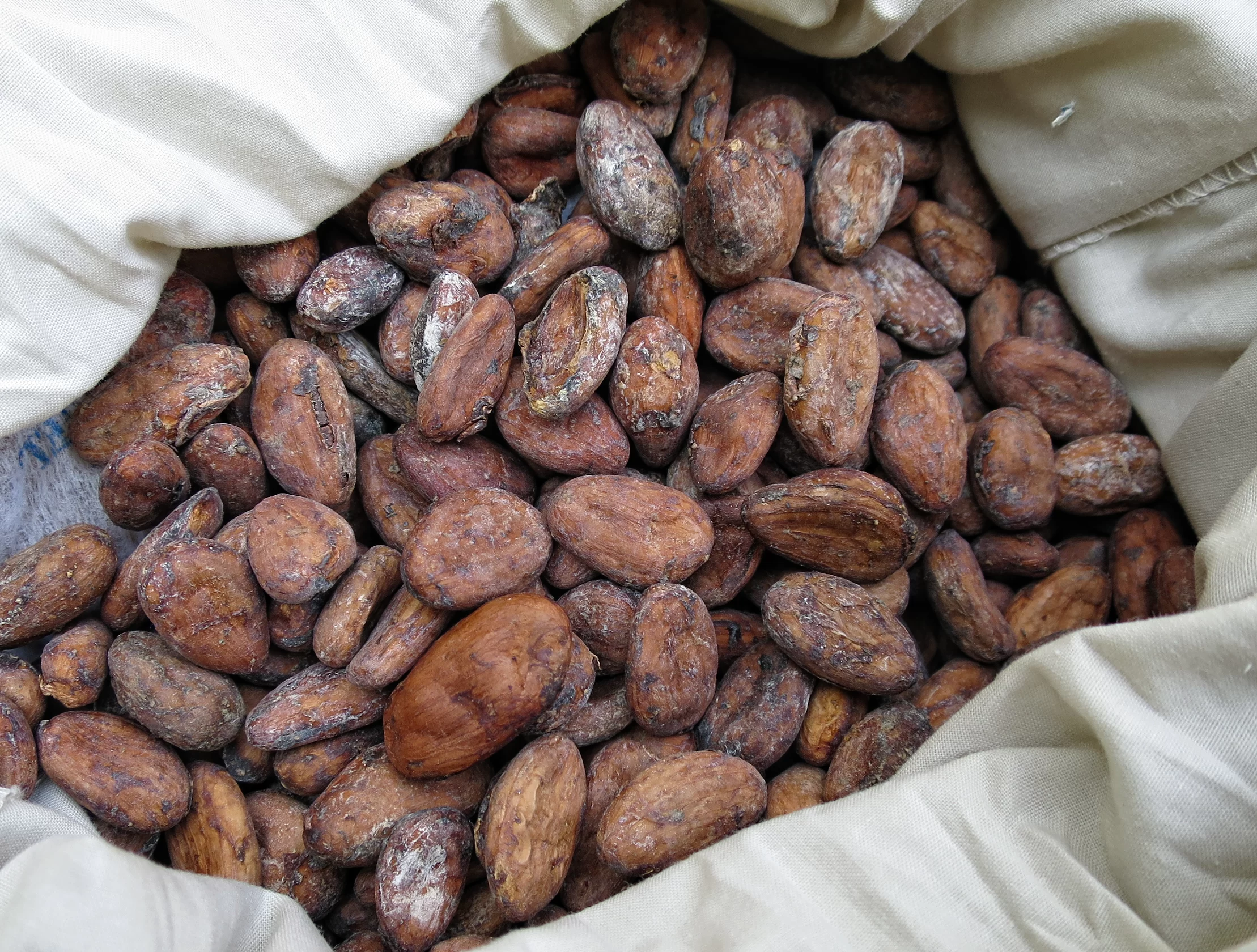
If you buy cocoa for a chocolate factory, a bean-to-bar brand or a trading desk, the Uganda cocoa beans price you are quoted in 2026 sits on top of one of the most dramatic price cycles the cocoa market has ever seen. In December 2024, New York cocoa futures broke through $12,000 a ton for the first time. Less than two years later, the International Cocoa Organization’s daily price was hovering near $5,800 a ton. So what does that mean for the beans you source from Uganda, and how do you tell a fair quote from a lucky one?
This guide walks you through how a Uganda cocoa beans price is actually built: the world reference price, the origin differential, the quality factors that move it, the seasons that shape availability and the new EU deforestation rules that will sit inside every European contract from the end of 2026.
What drives the Uganda cocoa beans price in 2026
Uganda is a small player next to Côte d’Ivoire and Ghana, which together supply more than 60% of the world’s cocoa. That means Uganda does not set the world price; it takes it. Every Uganda cocoa beans price you see starts from the global benchmark, usually the ICE futures market or the ICCO daily price, and is then adjusted for origin, quality and logistics.
Think of it like a fuel price at a petrol station far from the refinery. The crude oil price moves the pump price up and down, but the distance, the quality of the product and the reliability of the station decide whether you pay a little more or a little less than the neighbour across the road.
Cocoa price per ton: from the 2024 record to today
The last three years have been extraordinary. Erratic rainfall, drought and Cocoa Swollen Shoot Virus cut yields in West Africa, and prices climbed to a record of $12,636 a ton in New York in December 2024, according to Bloomberg. Chocolate makers rewrote recipes, raised retail prices and shrank pack sizes.
Then the cycle turned. Better weather and improved harvest forecasts in West Africa, new planting encouraged by high prices and weaker demand pushed prices down from late 2025. By early January 2026, ICCO daily prices were running at roughly $5,400 to $6,000 a ton, and prices had fallen more than 10% year on year in the first twelve days of the year. On 9 October 2026, the ICCO daily price stood at $5,759.07 a ton.
So the cocoa price per ton has roughly halved from its peak, yet it remains well above the levels most buyers were used to before 2023.
Cocoa price forecast: lower, but still volatile
Where next? Analysts quoted by Food Ingredients First in January 2026 expected market surpluses in the 2025/26 and 2026/27 seasons and a continued downward drift, but not a return to historical price levels within a year or two. The same report warned that volatility would stay elevated because of low liquidity in the futures market and depleted global stocks, and noted a Rabobank warning that overplanting could even trigger a price collapse as early as the 2027/28 season.
For a buyer, the lesson is simple. Do not plan your year around a single price. Build in ranges, consider forward contracts for part of your volume and keep an eye on West African weather, because a single drought can tighten supply again.
How Uganda’s cocoa exports have grown
High world prices have been a turning point for Uganda’s cocoa sector. Bank of Uganda data reported by the Daily Monitor shows how quickly export volumes and earnings have risen.
| Period | Export volume | Export value |
|---|---|---|
| Ten-year average to 2022 | 32,175 tonnes | $72.8 million |
| 12 months to June 2024 | 51,678 tonnes | $263.39 million |
| 12 months to June 2025 | 72,545 tonnes | $620.43 million |
That is a 28.7% jump in volume and a 57.5% jump in value in a single year. Monthly records followed too: February 2025 exports alone reached $68.7 million, an all-time high at the time.
Uganda cocoa growing regions
Cocoa grows across western, central and eastern Uganda. Bundibugyo District is the heart of the crop, accounting for about 70% of the country’s production capacity according to NAADS, with other important districts including Buikwe, Mukono, Jinja, Masindi, Hoima, Mubende, Mayuge, Mpigi, Luweero, Masaka and Kasese. Most Ugandan cocoa is still exported as raw beans, mainly to Europe.
From world price to FOB: how a Uganda cocoa beans price is built
When you ask an exporter for a Uganda cocoa beans price, you are really asking for a stack of components. Understanding the stack helps you compare quotes fairly and spot where a price is unusually high or low.
- The reference price. Usually the ICE futures price or the ICCO daily price on the day the contract is priced.
- The origin differential. A premium or discount reflecting origin reputation, flavour profile, certification and how reliably the exporter delivers to specification.
- Post-harvest processing. Collection, fermentation, drying, sorting, cleaning and bagging. Centralized fermentation costs more than farm-level drying, but it delivers more consistent beans.
- Inland logistics. Road transport from Uganda along the Northern Corridor to the Port of Mombasa, plus port handling and clearance.
- Documents and inspection. Phytosanitary certification, certificates of origin, cut tests and laboratory analysis.
- Freight and insurance (CIF only). On a CIF quote the exporter also pays ocean freight and insurance to your destination port. On FOB, those costs are yours.
If you are new to these terms, our guide to sourcing agricultural products from Uganda explains FOB and CIF in detail.
Cocoa beans price per kg: the simple maths
Prices are quoted per metric ton, but it helps to translate them into the units you actually handle. At the ICCO daily price of $5,759 a ton in October 2026:
- Per kg: $5,759 ÷ 1,000 ≈ $5.76 per kg at the world reference price.
- Per bag: a 62.5 kg jute bag is worth about $360 at that reference.
- Per container: a 20ft FCL of 12.5 metric tons is worth roughly $72,000 at that reference.
These figures are illustrations of the world reference price only, not a quote. Your final cocoa beans price per kg will move with the market on the day you fix the contract and with the differential, quality and Incoterm you agree.
Quality factors that move the price
Two lots priced on the same day can be worth very different amounts. Chocolate makers pay for consistency, flavour and yield, and those come down to measurable specifications. Here is how Trade Africa Direct specifies its Bundibugyo beans, and why each number matters to your price.
| Specification | Trade Africa Direct limit | Why it affects value |
|---|---|---|
| Fermentation (cut test) | Above 80% well fermented | Well-fermented beans develop chocolate flavour precursors; poorly fermented beans taste flat and astringent. |
| Slatey beans | Below 3% | Slatey (unfermented) beans signal weak fermentation control and reduce flavour quality. |
| Moisture | Below 7.5% | Higher moisture risks mould in transit and means you pay for water, not cocoa. |
| Bean count | 95–105 beans per 100 g | Large, uniform beans roast evenly and give better yields. |
| Total fat | 52%–56% | Fat drives cocoa butter yield, a major value driver for processors. |
| Free fatty acids | Below 1.75% | Low FFA indicates fresh, non-degraded beans and better butter quality. |
| Foreign matter | Below 0.5% | Hand sorting and magnet cleaning protect your equipment and your yield. |
Ask every supplier for cut-test reports and microbiological analysis for the specific lot you are buying, not a generic certificate. Trade Africa Direct provides both for every lot.
Bundibugyo origin and why it matters
Bundibugyo sits between the Rwenzori Mountains and the Semliki Wildlife Reserve, and its beans have a distinctive profile: deep chocolatey base notes with subtle hints of red fruit and earthiness. For bean-to-bar makers, that flavour story is part of the value. For industrial buyers, the attraction is high fat content and a dependable supply from Uganda’s main growing district.
Uganda cocoa fermentation: centralized versus farm-level
Much of the variation in African cocoa comes from fermentation done in small batches on individual farms. Trade Africa Direct uses centralized fermentation instead: beans go through 6–7 days in tiered wooden boxes, which keeps cut-test scores high and slatey beans to a minimum. The company also maintains a direct collection point in Bundibugyo, so beans move from farmers to fermentation without several layers of brokers in between.
When you compare a Uganda cocoa beans price between suppliers, ask how and where the beans were fermented. A slightly higher price for consistent, well-fermented beans is often cheaper than a low price for a lot you later have to blend away.
Timing your purchase around Uganda’s cocoa seasons
Uganda’s equatorial climate gives cocoa two harvest peaks a year. According to the 2026 Uganda harvest calendar, cocoa peaks from June to August and again in November and December, with lean availability in January, February and September.
- Peak months bring the highest volumes and the widest choice of lots.
- Lean months still have stock, but competition for the best beans is higher.
- For sea freight, finalize contracts about 45 days before the peak season begins, to allow for road transit to Mombasa and port clearance.
If you buy several origins, Uganda’s November–December peak can be a useful complement to the West African main crop calendar.
EUDR: compliance is now part of the price
If you sell into the European Union, the EU Deforestation Regulation is the biggest non-price factor in cocoa sourcing right now. After two postponements, the regulation now applies from 30 December 2026 for large and medium operators and traders, and from 30 June 2027 for micro and small enterprises, according to EY’s January 2026 tax and regulatory update.
Under EUDR, operators must show that cocoa was not grown on land deforested after the cut-off date, which in practice means farm-level geolocation data and a traceable chain of custody. That work costs money, and suppliers who can provide it will increasingly price it into their quotes.
Questions to ask your Uganda cocoa supplier about EUDR
- Can you trace this lot back to the farms or collection point where it was bought?
- What geolocation data can you share for the farms that supplied it?
- How do you keep EUDR-compliant beans separate from other stock?
Packing, logistics and export documents
Logistics are part of the price, so it pays to know the standard formats before you compare quotes.
- Packing: 62.5 kg or 64 kg food-grade jute bags.
- Container load: a 20ft FCL holds 12.5 metric tons, about 200 bags.
- Cocoa butter: 25 kg food-grade cartons with polyethylene liners, stored at +15°C.
- Route: road from Kampala to the Port of Mombasa, then sea freight, with transit of 25–35 days to Rotterdam or Hamburg.
- Documents: every shipment includes a Phytosanitary Certificate, a statement on origin from a REX-registered exporter for duty-free EU entry under Everything But Arms and a Certificate of Origin (URSB).
Cocoa is sensitive to humidity and cross-contamination, so ask how bags are protected in the container. Read more about our quality, certification and logistics standards.
How to request a Uganda cocoa beans price quote
A good quote request saves days of back-and-forth. Here is the process Trade Africa Direct follows:
- Send your requirements: product, target grade, volume, destination port and preferred Incoterm (FOB or CIF).
- Receive a formal quote within 24–48 hours, including current pricing, lead times and payment terms (LC or TT).
- Verify with a sample: if the quote is accepted, a 1 kg commercial sample is dispatched by DHL for your QA lab.
- Contract and ship: after sample approval and deposit or LC issuance, grading, packing and phytosanitary clearance begin.
Conclusion: reading the Uganda cocoa beans price in a volatile market
The Uganda cocoa beans price in 2026 is a story of two forces. The world price has fallen sharply from its 2024 record, but it remains high by historical standards and volatile. At the same time, Uganda’s cocoa sector has grown fast, and buyers who look beyond the headline price, at fermentation, moisture, fat content, traceability and logistics, can secure dependable, flavourful beans from Bundibugyo.
Ready to see current numbers? Request a FOB or CIF quote for Ugandan cocoa beans, or message our Kampala export team on WhatsApp at +256 772 921055.
What is the Uganda cocoa beans price per ton in 2026?
Uganda prices follow the world benchmark. The ICCO daily price was about $5,759 per ton on 9 October 2026, down from a record above $12,000 in December 2024. Your final price adds or subtracts an origin differential and depends on quality, Incoterm and the day you fix the contract.
How is the Uganda cocoa beans price calculated?
It starts from the world reference price, usually ICE futures or the ICCO daily price. Exporters then apply an origin differential and add costs for fermentation, drying, sorting, bagging, transport to Mombasa and documents. CIF quotes also include ocean freight and insurance to your port.
What is the Uganda cocoa beans price per kg?
Divide the per-ton price by 1,000. At the ICCO reference of $5,759 per ton in October 2026, that is about $5.76 per kg before origin differentials and costs. A 62.5 kg jute bag is worth roughly $360 at that reference price. These are illustrations, not a quote.
When is the best time to check the Uganda cocoa beans price and buy?
Uganda cocoa peaks from June to August and in November and December, with lean supply in January, February and September. For sea freight, finalize contracts about 45 days before the peak begins so there is time for road transit to Mombasa and port clearance.
Does EUDR affect the Uganda cocoa beans price?
Yes. From 30 December 2026, large and medium EU operators must prove cocoa is deforestation-free, which requires farm-level traceability and geolocation data. Collecting and verifying that data costs money, so suppliers who can provide it increasingly include it in their quotes.
Sources
- Bloomberg, “Cocoa Soars Above $12,000 to Reach Fresh Record on Supply Fears”, 18 December 2024: bloomberg.com
- International Cocoa Organization (ICCO), daily price, 9 October 2026: ICCO on X
- Food Ingredients First, “Cocoa prices ease but alternatives and reformulation stay in focus”, 14 January 2026: foodingredientsfirst.com
- Daily Monitor, “Rising cocoa price: Can Uganda do more than export raw beans” (Bank of Uganda and NAADS data), 2025: monitor.co.ug
- Daily Monitor, “Boom for cocoa farmers as Uganda’s export earnings surge by 42%”, 28 April 2025: monitor.co.ug
- EY, “EU Deforestation Regulation application postponed to 30 December 2026”, January 2026: ey.com